
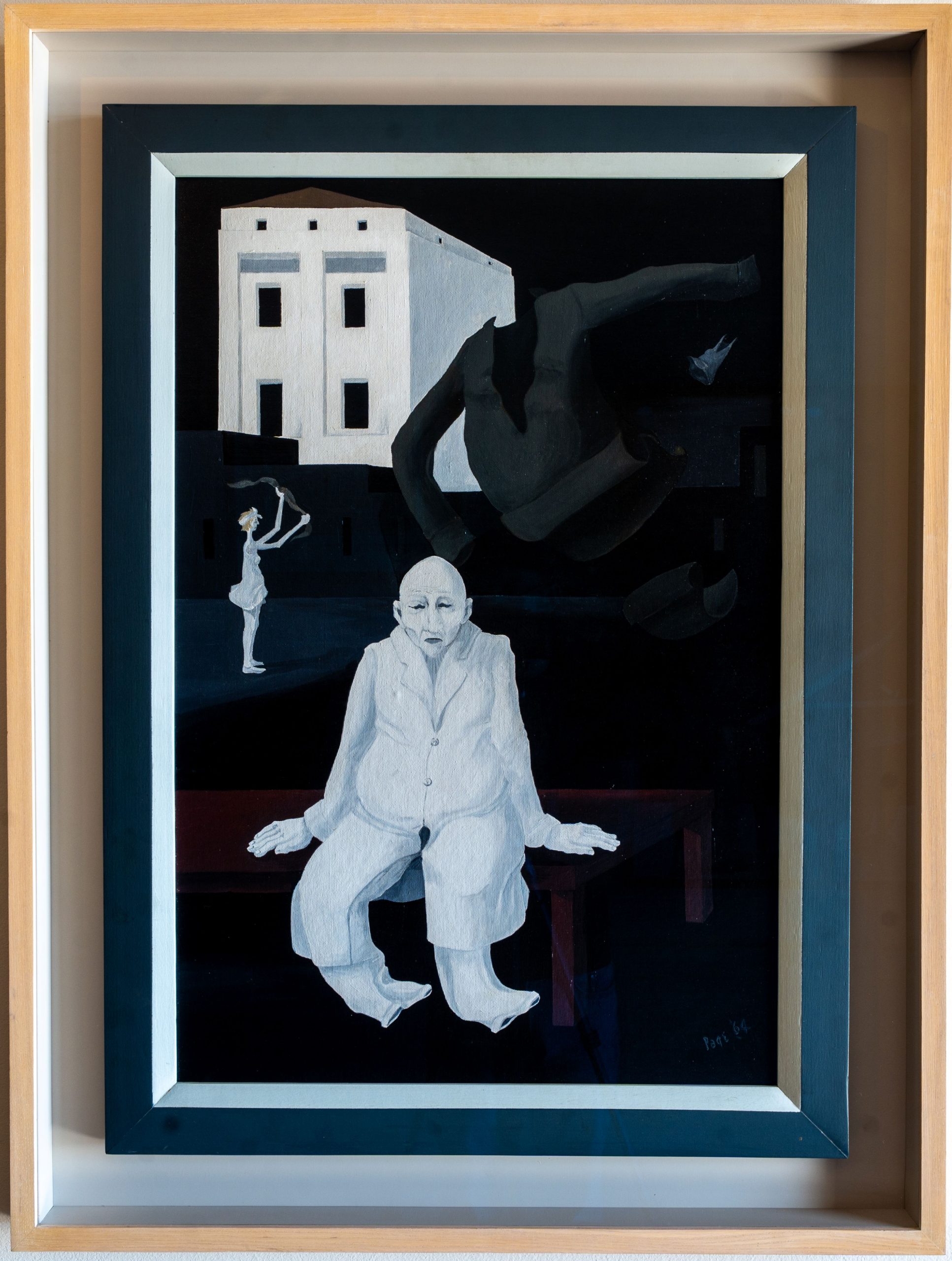
Title: Ghostly Street
Medium: Oil on canvas laid down on board
Dated: 1964
Framed: 75cm x 50cm
Fred Page is regarded South Africa’s foremost surrealist painter. He made a conscious decision to develop his own vernacular style which he single-mindedly pursued until the end of his life. His paintings possess a particularly eerie and alienating ambience which were created through stark architectural backgrounds with blackened and blank windows, as well as etiolated and wispy figures. Jeanne Wright and Cecil Kerbel (2011:XIX – XX) explained his work as communicating an “overall sense of profound alienation from the bustle of normal life.”
In the artwork, Ghostly Street, this sense of alienation is particularly present. Page suffered a lot of loss throughout his life and ended up a lonely figure walking the streets of Port Elizabeth. His father abandoned them when he was a young boy, and his mother died during the 1918 flue pandemic when he was only 10 years old. This caused him and his siter Molly to drift between relatives and an orphanage in Potchefstroom. Molly also died very young during childbirth leaving Page on his own. Page got married in 1934 and divorced the same year. The horrors experienced during the war also haunted him until the end of his life (Wright & Kerbel 2011:1-8).
